Top
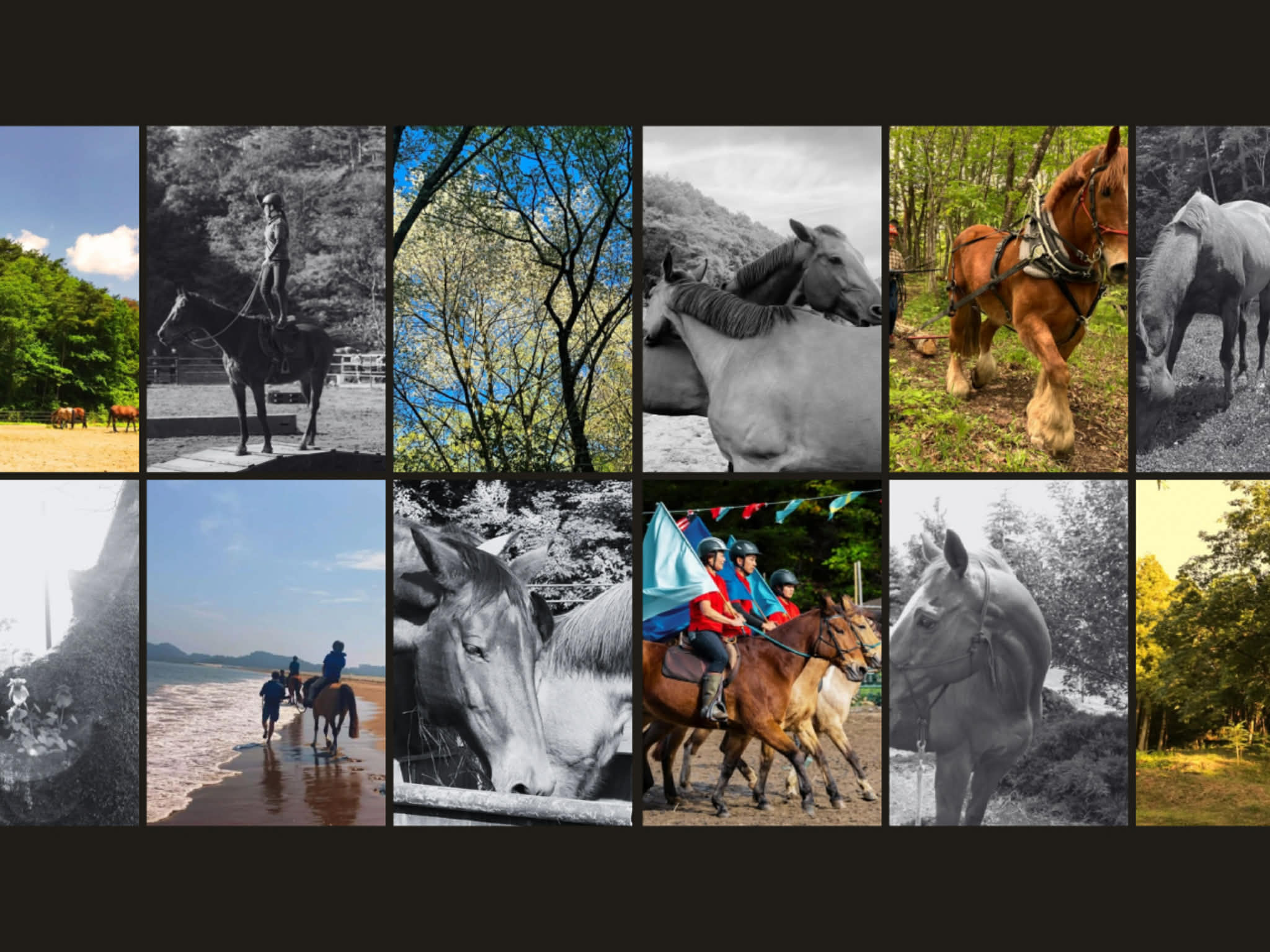
In the stillness of the shadows, horses, forests, and the earth quietly wait—longing for connection, for dialogue. We approach gently, so as not to startle, and with patience we devote the time and care needed to nurture these bonds. And then, as if in response, a warm and tender light begins to pour down, restoring each to its true brilliance.
For more than twenty years, this has been our journey: welcoming horses once abandoned, seeing infinite possibility in lands and forests left behind, and walking day after day through the work of cultivation and renewal. What others had given up on, we embraced. What seemed forgotten, we believed in. Looking back, it has been a story of resilience, of restoration, and of hope.
Our journey began in April 2004, when just the two of us reclaimed 1.5 hectares of abandoned farmland in Morioka, Iwate. Over six years, we built a small horse ranch with our own hands. With the strength of horses, we sought to bring healing to people, to address local challenges, and to care for the forests.
Then came March 2011. The Great East Japan Earthquake struck, and from that day forward, our horses became companions in hope. Together, we continued supporting children in the disaster-affected coastal areas of Iwate and Miyagi. Through this work, we found a bond with Higashimatsushima City. With the heartfelt support of many, we began reclaiming undeveloped forest land in November 2013, and by April 2018, our ranch found its new home.
Side by side, we restored the neighboring forest. Once dark and lifeless, it has slowly awakened into a vibrant woodland where wild vegetables grow and small animals return. We named this forest Mimamori—which,if translated directly, means‘Beautiful Horse Forest.’
In April 2023, we took another step forward by caring for two hectares of unused land to create a new satoyama landscape.
Today, with beautiful horses helping to nurture beautiful forests, we invite you to experience programs that embody sustainable living and true coexistence with nature. May your visit bring smiles, healing, and a moment to reflect on what genuine richness and happiness truly mean.
Ranch Maneger KEN HACHIMARU

牧場長
1.Fundamental Philosophy
- We respect horses not as objects to be managed, but as partners with emotions, intelligence, and social nature.
- Our foremost priority is to create and continuously maintain a comfortable environment where horses can live naturally among their companions, ensuring their safety and maximizing the fulfillment of their needs, in accordance with Nordic animal welfare standards and MAFF technical guidelines.
- Our ranch is dedicated to the themes of coexistence, regeneration, and healing. It is a place where horses and humans empower one another, sharing the wisdom, joy, and abundance found through living alongside these noble animals.
2.Living Environment
〇Stall Requirements
Based on Nordic standards, we ensure sufficient space, ceiling height, lighting, and ventilation according to each horse’s height.
〇Minimum Floor Space (By Withers Height)
・Up to 160 cm: 9 m² or more
・Up to 170 cm: 10 m² or more
・Up to 180 cm: 12 m² or more
〇 Ceiling Height
・Must be at least 1 meter above the horse’s head height.
・Structure must ensure horses do not hit their heads even when fully alert or startled.
〇Lighting
・Windows must be provided to allow natural sunlight.
・Brightness must be sufficient for horses to maintain their natural circadian (day-night) rhythms.
〇Ventilation
・Maintain ammonia levels below those that impact health.
・The structure must ensure continuous airflow.
・Must prevent condensation and mold growth.
〇Social Contact
・Total isolation is prohibited.
・The structure must allow horses to perceive each other through sight, sound, and smell.
〇Bedding
・Maintain a soft, dry surface that allows horses to lie down and rest comfortably.
・Cleaned daily to prevent ammonia odors.
3. Turnout & Exercise
Daily Turnout
We ensure horses are turned out for a minimum of 6 hours daily. Turnout is conducted in groups to respect the horses’ natural social behavior and hierarchy.
Seasonal Adjustments
The husbandry approach is adjusted seasonally to maximize comfort:
- Spring/Autumn: Management is centered around extensive use of pastures/paddocks.
- Summer: Achieved via night turnout (using summer sheets/rugs).
- Winter: Achieved via day turnout (using winter blankets/rugs).
4.Feeding & Watering
- As horses are natural ‘trickle feeders’ designed to consume small amounts of food throughout the day, we provide a forage-focused diet. Concentrates are limited to once daily and adjusted based on each
horse’s body weight and activity level.
- We ensure constant access to clean water at all times, with measures in place to prevent freezing during the winter season.
5. Health & Veterinary Care
- Daily monitoring includes appetite, gait, behavior, and overall condition.
- Hoof care is performed every 4–8 weeks, and dental care is provided regularly.
- For senior or ill horses, **pain management and quality of life** are prioritized.
6.Communication, Training, and Handling
- Positive and Ethical Training
We do not employ training methods that rely on fear or pain.
- Mental and Emotional Well-being
We consider mental distress and excessive tension to be critical indicators of welfare, treated with the same importance as physical pain.
- Evidence-Based Communication
Guided by equine behavioral psychology, we tailor our approach to each horse’s personality and condition. We provide learning steps at a pace the horse can understand, ensuring communication is consistently compassionate and coherent.
7.Social Well-being
- Horses are social animals, and connections with their companions are an essential need.
- Maintain herd stability and avoid frequent member changes.
- When introducing a new horse, do so gradually and safely.
8.Lifetime Care & Euthanasia
- We take responsibility for each horse’s entire life, including retirement.
- When irreversible suffering occurs, euthanasia is considered a welfare-based choice and is performed with a veterinarian in a calm, familiar environment.
9.Documentation
- Records of health, feeding, hoof and dental care, transport, and incidents are maintained.
- Documentation supports welfare improvement and team communication.
10.Human–Horse Relationship
- Horses are our mirrors, teachers, and companions.
- We protect their dignity and build relationships where horses **choose to trust**.
- We value learning from horses and growing alongside them.