Top
In the stillness of the shadows, horses, forests, and the earth quietly wait—longing for connection, for dialogue. We approach gently, so as not to startle, and with patience we devote the time and care needed to nurture these bonds. And then, as if in response, a warm and tender light begins to pour down, restoring each to its true brilliance.
For more than twenty years, this has been our journey: welcoming horses once abandoned, seeing infinite possibility in lands and forests left behind, and walking day after day through the work of cultivation and renewal. What others had given up on, we embraced. What seemed forgotten, we believed in. Looking back, it has been a story of resilience, of restoration, and of hope.
暗がりの中でじっと”関り”や”対話”を待っている馬たちや森や大地に、驚かせぬようそっと歩み寄り、必要充分な時間と手間暇をかけて関わりを育んでいくうちに、やがて明るく温かで優しい光が降り注ぎ、それぞれの本来の輝きを取り戻す・・・そんな取り組みを20年以上続けて参りました。誰かがあきらめた馬たちを仲間に向かい入れ、誰かに見放された荒れ地や森に無限の可能性を感じ、振り返れば開墾開拓の日々は回復力と再生と希望の物語でした。
Our journey began in April 2004, when just the two of us reclaimed 1.5 hectares of abandoned farmland in Morioka, Iwate. Over six years, we built a small horse ranch with our own hands. With the strength of horses, we sought to bring healing to people, to address local challenges, and to care for the forests.
Then came March 2011. The Great East Japan Earthquake struck, and from that day forward, our horses became companions in hope. Together, we continued supporting children in the disaster-affected coastal areas of Iwate and Miyagi. Through this work, we found a bond with Higashimatsushima City. With the heartfelt support of many, we began reclaiming undeveloped forest land in November 2013, and by April 2018, our ranch found its new home.
Side by side, we restored the neighboring forest. Once dark and lifeless, it has slowly awakened into a vibrant woodland where wild vegetables grow and small animals return. We named this forest Mimamori—which,if translated directly, means ‘Beautiful Horse Forest.’
In April 2023, we took another step forward by caring for two hectares of unused land to create a new satoyama landscape.
Today, with beautiful horses helping to nurture beautiful forests, we invite you to experience programs that embody sustainable living and true coexistence with nature. May your visit bring smiles, healing, and a moment to reflect on what genuine richness and happiness truly mean.
2004年4月、当時の岩手県盛岡市の1.5haの耕作放棄地を夫婦ふたりで開墾開拓し、6年がかりで小さな馬の牧場を手作りしました。
そこでは、馬たちのチカラを借りて、人々のこころや地域課題や森林環境を整えるお手伝いなど、微力ながら現存する社会課題の解決に取り組んで参りました。 そして翌年の2011年3月、東日本大震災の発災以降、馬たちのチカラを借りて岩手と宮城沿岸部の被災地子ども支援を継続的に行ってきた中で、宮城県東松島市とご縁をいただき、多くの方々のご支援を賜りながら2013年11月より牧場拠点用地となる未整備林地を開墾開拓し、2018年4月現在の場所に牧場移転いたしました。
また、同じく2013年11月からは隣接する、荒廃森林の整備もスタート。樹々にはツルやツタが巻き付き、脚を踏み入れる場所も無く日差しも届かない暗かった森は、今では多くの山菜が採れるようになり、山うさぎやリスなどの小動物が住む豊かな美しい森に変わりつつあります。私たちはこの森を『美馬森』と名付けました。
2023年4月からは未活用地で里山づくりを始めるべく、2haの大地の開墾開拓もスタートしました。
美しく健全な馬たちで美しく健全な森をつくり、そんな森と里山に見守られながら、資源循環型の地球にやさしい暮らしや自然との共生が実感できる各種プログラムを豊富にご用意しております。訪れた方々が笑顔になったり癒されたり、また真の豊かさや幸せについて改めて想い巡らせるきっかけになれば嬉しい限りです。
Ranch Maneger KEN HACHIMARU

牧場長
1.Fundamental Philosophy
-We respect horses not as objects to be managed, but as partners with emotions, intelligence, and
social nature.
-Our foremost priority is to create and continuously maintain a comfortable environment where horses
can live naturally among their companions, ensuring their safety and maximizing the fulfillment of
their needs, in accordance with Nordic animal welfare standards and MAFF technical guidelines.
-Our ranch is dedicated to the themes of coexistence, regeneration, and healing. It is a place where
horses and humans empower one another, sharing the wisdom, joy, and abundance found through
living alongside these noble animals.
1.基本理念
‐私たちは、馬を「管理する対象」ではなく、感情・知性・社会性を持つパートナーとして尊重します。
-北欧の動物福祉基準とMAFFの技術指針に基づき、 馬の安全を確保し、欲求を最大限に満たせるよう努め、仲間とともに自然に生き
られる快適環境をつくり、整え続けることを最優先とします。
-私たちの牧場は、共生・再生・癒しをテーマに、 馬と人が互いに活かし・活かされ、馬との暮らしから得られる魅力や教えや豊かさを分
かち合う場所であり続けます。
2.Living Environment
〇Stall Requirements
Based on Nordic standards, we ensure sufficient space, ceiling height, lighting, and ventilation according to each horse’s height.
〇Minimum Floor Space (By Withers Height)
・Up to 160 cm: 9 m² or more
・Up to 170 cm: 10 m² or more
・Up to 180 cm: 12 m² or more
〇 Ceiling Height
・Must be at least 1 meter above the horse’s head height.
・Structure must ensure horses do not hit their heads even when fully alert or startled.
〇Lighting
・Windows must be provided to allow natural sunlight.
・Brightness must be sufficient for horses to maintain their natural circadian (day-night) rhythms.
〇Ventilation
・Maintain ammonia levels below those that impact health.
・The structure must ensure continuous airflow.
・Must prevent condensation and mold growth.
〇Social Contact
・Total isolation is prohibited.
・The structure must allow horses to perceive each other through sight, sound, and smell.
〇Bedding
・Maintain a soft, dry surface that allows horses to lie down and rest comfortably.
・Cleaned daily to prevent ammonia odors.
2.飼養環境
– 馬房は、北欧基準に基づき 体高に応じた十分な広さ・天井高・採光・換気を確保します。
〇馬房の広さ(体高に応じた数値基準)
•体高 160cm → 9㎡以上
•体高 170cm → 10㎡以上
•体高 180cm → 12㎡以上
〇天井高
・馬の頭の高さ+最低1m
・馬が頭を上げてもぶつからない構造。
〇採光
・自然光が入る窓があること。
・馬が昼夜のリズムを保てる明るさが必要。
〇換気
・アンモニア濃度が健康に影響しないレベルに保つ。
・空気の流れが止まらない構造。
・結露・カビの発生を防ぐ。
〇馬同士の視覚接触
・完全に隔離する構造は禁止
・馬は互いの存在を視覚・聴覚・嗅覚で感じられる必要がある。
〇寝床(敷料)
・馬が横になって休める柔らかさと乾燥状態を維持。
・毎日清掃し、アンモニア臭を防ぐ。
3. Turnout & Exercise
Daily Turnout
We ensure horses are turned out for a minimum of 6 hours daily. Turnout is conducted in groups to respect the horses’ natural social behavior and hierarchy.
Seasonal Adjustments
The husbandry approach is adjusted seasonally to maximize comfort:
・Spring/Autumn: Management is centered around extensive use of pastures/paddocks.
・Summer: Achieved via night turnout (using summer sheets/rugs).
・Winter: Achieved via day turnout (using winter blankets/rugs).
3.放牧・運動
-基本、 馬は毎日放牧を6時間以上行います。 また群れでの放牧を行い、馬の社会性を尊重します。
-春や秋などの過ごしやすい時期は放牧中心の飼養となり、夏期は夜間放牧(夏馬着着用)、冬期は昼間放牧(冬馬着着用)を実現します。
4.Feeding & Watering
‐As horses are natural ‘trickle feeders’ designed to consume small amounts of food throughout the day,
we provide a forage-focused diet. Concentrates are limited to once daily and adjusted based on each
horse’s body weight and activity level.
‐We ensure constant access to clean water at all times, with measures in place to prevent freezing
during the winter season.
4.採食・給水
– 馬は1日中少量ずつ採食する動物であるため、粗飼料中心の食餌を提供し、1日1回濃厚飼料を体重と運動量に合わせて給餌します。
– 清潔な水を常時利用可能にし、冬季は凍結を防ぐ対策をします。
5. Health & Veterinary Care
– Daily monitoring includes appetite, gait, behavior, and overall condition.
– Hoof care is performed every 4–8 weeks, and dental care is provided regularly.
– For senior or ill horses, **pain management and quality of life** are prioritized.
5.健康管理
– 毎日、食欲・排泄・歩様・行動の変化を観察します。
– 蹄は4〜8週間ごとにケアし、歯科ケアも定期的に行います。
– 老齢馬・病馬には、痛みの管理と生活の質(QOL)を最優先します。
6.Communication, Training, and Handling
‐Positive and Ethical Training
We do not employ training methods that rely on fear or pain.
‐Mental and Emotional Well-being
We consider mental distress and excessive tension to be critical indicators of welfare, treated with the
same importance as physical pain.
‐Evidence-Based Communication
Guided by equine behavioral psychology, we tailor our approach to each horse’s personality and
condition. We provide learning steps at a pace the horse can understand, ensuring communication is
consistently compassionate and coherent.
6.コミュニケーション・調教・取り扱い
– 恐怖や痛みに依存した調教は行いません。
– 精神的な混乱や過度の緊張は、身体的苦痛と同様に重要なウェルフェア指標と捉えます。
‐馬の行動心理学を学び、馬ごとのタイプや状態に合わせ、馬が理解できるスピードと学習ステップを用意し、愛情深く・一貫性のあるコミュニケーションを行います。
7.Social Well-being
‐Horses are social animals, and connections with their companions are an essential need.
‐Maintain herd stability and avoid frequent member changes.
‐When introducing a new horse, do so gradually and safely.
7.社会性の尊重
– 馬は社会的動物であり、仲間とのつながりは必須のニーズです。
– 群れの安定性を守り、頻繁なメンバー変更は避けます。
– 新しい馬を迎える際は、段階的に安全に導入します。
8.Lifetime Care & Euthanasia
-We take responsibility for each horse’s entire life, including retirement.
– When irreversible suffering occurs, euthanasia is considered a welfare-based choice and is
performed with a veterinarian in a calm, familiar environment.
8.終生ケア・安楽死
– 馬の一生に責任を持ち、引退後の生活も含めてケアを継続します。
– 回復不能な苦痛がある場合、安楽死は福祉上の選択肢と捉え、馬が安心できる環境で獣医師とともに行います。
9.Documentation
-Records of health, feeding, hoof and dental care, transport, and incidents are maintained.
-Documentation supports welfare improvement and team communication.
9.記録管理
– 健康・飼養・蹄・歯・輸送・事故の記録を継続的に管理します。
– 記録は、馬の福祉向上とスタッフ間の情報共有に活用します。
10.Human–Horse Relationship
– Horses are our mirrors, teachers, and companions.
– We protect their dignity and build relationships where horses **choose to trust**.
– We value learning from horses and growing alongside them.
10.人と馬の関係性
– 馬は私たちの鏡であり、教師であり、仲間です。
– 馬の尊厳を守り、馬が人に対して安全を感じ、関わりたいと思える関係を築きます。
– 私たちは、馬から学び、馬とともに成長する姿勢を大切にします。
詳細はこちらからご覧いただけます。 発出団体一覧 | J-GBF ネイチャーポジティブ宣言
News
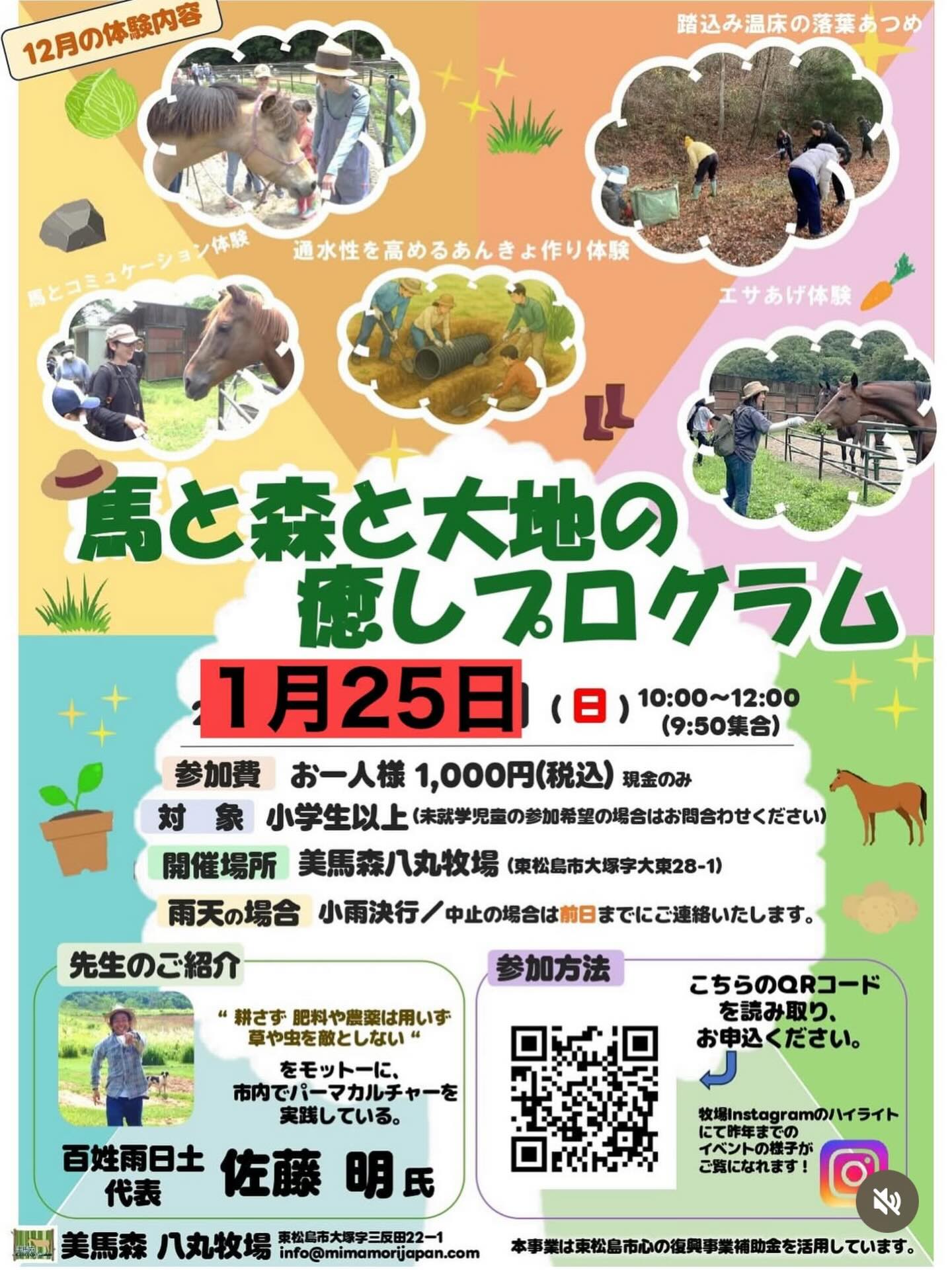
・開催日時 1月25日(日)10時~12時
(9:50集合)
・開催場所 美馬森 八丸牧場
(東松島市大塚字大東28-1)
・参加費 おひとり1000円
(当日、現金でのお支払い)
・参加対象 小学生以上
(未就学児童の参加希望の場合はご連絡ください)
・雨天の場合 小雨決行
(中止の場合は前日までにご連絡致します)
・内容 馬とのふれあい、餌付け体験、森の中で働く大型馬の見学と森の恵みを集めるお手伝い、おやつタイムなど
・講師の紹介 百姓雨日土 佐藤明 氏
・申込方法 以下のグーグルフォームよりお申込み下さい。
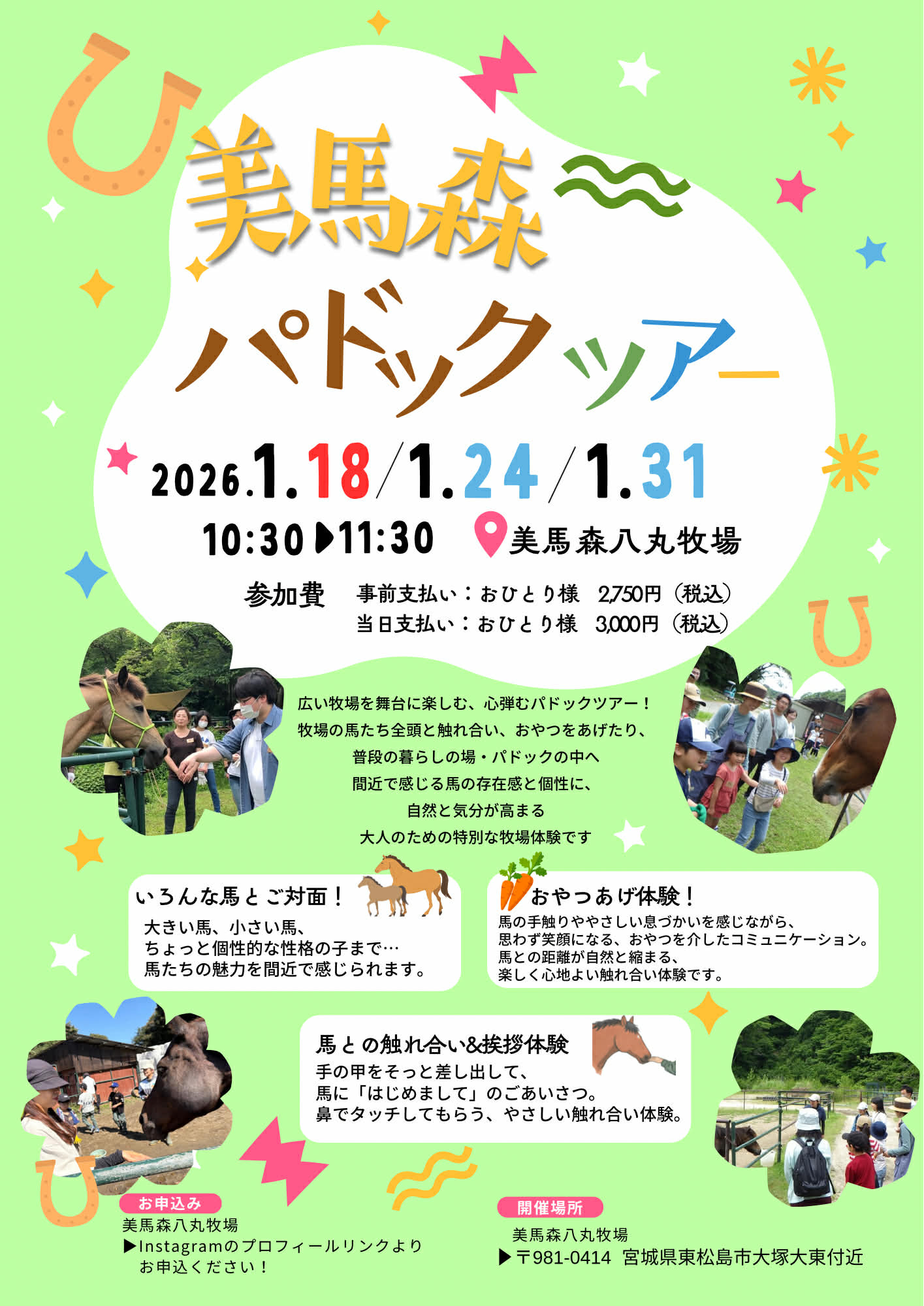
・開催日時 1月月18日(日)・24日(土)・31日(土) 10:30~11:30 (10:20集合)
・開催場所 美馬森 八丸牧場 (東松島市大塚字三反田22-1)
・参加費 事前支払(振込) おひとり 2750円 / 当日現金支払 おひとり 3000円
*子どもも大人も同額です。
・参加対象 どなたでもOK
・雨天の場合 小雨決行 (中止の場合は前日までにご連絡致します)
・内容 牧場案内のガイドのもと、馬に関するオモシロ話を聞きながら馬たち全頭とふれ合って餌付け体験を楽しむ牧場ツアーです。
・申込方法 以下のグーグルフォームよりお申込み下さい。